If you want to verify a Chinese supplier of plastic machinery properly, you need to check four things independently: that the company legally exists and is allowed to make what it sells, that it actually builds machines rather than reselling them, that the machine you will receive uses the components you were promised, and that your money goes to the company named on the contract. Each check is simple on its own. Problems arise when buyers rely on one signal, such as a polished website, a platform badge or a friendly salesperson, and skip the rest.
This guide sets out the checklist HassanPlas uses from our office in Taizhou, Zhejiang before recommending any factory to a buyer. For the wider buying process, see how to buy machinery from China.
Why supplier verification matters for machinery
Machinery is not like consumer goods, where a bad batch costs you one order. A moulding machine or blow moulding line is a large single payment, usually with a deposit paid months before you see the product, and its quality only becomes fully visible after hundreds of hours of running. A weak hydraulic pump, an undersized motor or a clone controller may pass a short demonstration and fail in the first season. By then the warranty is hard to enforce across borders.
Verification is cheap compared with that risk. Most of the checks below cost nothing but time, and a factory visit or professional audit is a small fraction of a machine price.
Check the business licence and registered scope
Every legally registered Chinese company has a business licence carrying an 18-character Unified Social Credit Code. Ask for a clear scan, then look the company up yourself on China's National Enterprise Credit Information Publicity System. Do not rely on a screenshot the supplier sends you. Check:
- Exact company name in Chinese and English, and that it matches the contract and the proforma invoice.
- Registration status: active, not cancelled or revoked, and not listed with abnormal operations.
- Date of establishment: a company set up last year claiming "20 years of experience" needs an explanation (sometimes a new entity for an old business, sometimes not).
- Registered capital and legal representative, for consistency with what you are told.
- Business scope: a manufacturer's scope normally includes production or manufacture of the relevant machinery. A scope limited to sales, technology services or import and export indicates a trading company.
- Registered address: compare with the factory address you are given and with satellite imagery. An office tower address for a "factory" is a question to ask.
HassanPlas tip: The publicity system is in Chinese. If you cannot read it, use a browser translator, or ask your sourcing partner to pull the record and send you the original page alongside a translation.
Factory or trading company: the tells
A trading company is not necessarily a problem. The problem is a trader pretending to be a factory, because you then have no visibility of who builds your machine or whether it changes between orders. Signs you are talking to a trader:
- The product range is very wide: injection machines, blow moulders, extruders, shredders and packaging machines all from one "factory".
- Photos of the "workshop" are the same images that appear on several other sellers' pages.
- They resist a live video call from the assembly floor, or the call only shows a showroom.
- Technical questions about screw design, hydraulic circuit or mould cooling are answered slowly or vaguely.
- The factory address keeps changing, or the visit is arranged at "our partner factory".
- The business licence scope is trading-only, as above.
China factory audit checklist (on-site or video)
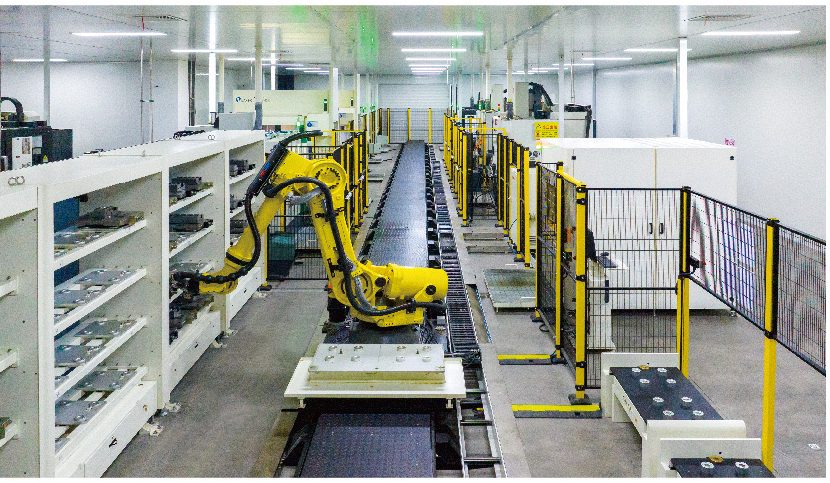
An in-person visit is best. If that is not possible, a live, unscripted video audit is the minimum. Ask the person holding the phone to walk continuously, not to cut between rooms, and to point the camera where you ask. Use this China factory audit checklist:
Assembly floor
- Several machines at different stages of assembly, not only finished units
- Machines on the floor with customer name plates or packing labels for different destinations
- Clean, organised workstations; cable routing and hydraulic piping done neatly
Machining and fabrication
- CNC machining centres, lathes or boring machines for platens, tie bars and frames, or a credible explanation of which parts are outsourced
- Welding and frame fabrication area, with frames being stress-relieved or machined after welding where relevant
Stock of key components
- Shelves of PLCs, servo drives, pumps, valves and motors, with brand labels visible
- Screws and barrels in stock, with material or treatment specified
Quality control
- Written QC records or check sheets for finished machines
- Incoming inspection of components
- A test area where machines are run before dispatch, ideally with moulds fitted
Running machines
- Ask to see a machine of your type running, producing product, for several cycles
- Ask for the cycle time on screen and compare with the quoted figure
Decision rule: If a supplier will not do a live floor walk within a few days of being asked, take them off the shortlist. Genuine factories do this routinely for export customers.
References and installed base
Ask for two or three customers who bought the same model, ideally in or near your country, and who have run it for at least a year. Speak to them directly, preferably by video call so you can see the machine. Useful questions:
- Does the machine reach the quoted output on your product?
- What failed in the first year, and how quickly did the supplier respond?
- How long do spare parts take to arrive, and are prices reasonable?
- Did the commissioning technician stay until the machine was producing to standard?
Be wary of references that are only provided as written letters or that are always "too busy" to speak.
Bank account and payment checks
The beneficiary account should be a corporate account in the same company name that appears on the business licence and the contract. Red flags include a personal account, an account in a different company name ("our sister company handles export"), or an account in a third country with no explanation.
Bank details should be written into the contract. Before each payment, confirm them by phone or video with a contact you have already verified, using a number you obtained independently, not one from the latest email.
How to avoid scams buying machinery from China
Most losses we see are not dramatic frauds. They are predictable patterns that a checklist would have caught:
- Changed bank details emails: a hacked or spoofed email announces a new account just before the balance is due. Never act on a bank change by email alone.
- Bait-and-switch components: the quote lists branded hydraulics and controls; the machine arrives with cheaper unbranded or different-brand parts.
- Used or refurbished sold as new: repainted frames, worn tie bars, old manufacture dates on motor nameplates, or a controller with a high hour count.
- Undersized motors and pumps: the machine runs during a short demo but cannot hold cycle time or pressure in continuous production.
- Fake brand-name components: counterfeit nameplates on pumps, valves, contactors or drives.
- Sample machine versus production machine: you inspect a well-built demonstration machine; a different unit is shipped.
- Missing accessories: the spare parts kit, mould, manuals or electrical diagrams are "shipped separately" and never arrive.
Verifying brand-name components
Many Chinese machines use well-known international component brands for controls, drives and hydraulics, such as Siemens, Schneider, Yuken and others. These brands command a premium, which is why they are sometimes faked or substituted. To verify:
- List every key component with brand and model in the technical annex of the contract.
- During inspection, photograph each nameplate clearly, including serial numbers.
- Compare model numbers with the brand's published catalogue. Check that the rating (kW, flow, pressure) matches the machine's requirement.
- Look for poor printing, misspellings, stickers instead of riveted or engraved plates, and missing serial numbers.
- Where in doubt, ask the brand's local distributor whether a serial number is genuine.
- Mark or seal key components after inspection so they cannot be swapped before crating.
The same discipline applies when buying injection moulding machines, extrusion blow moulding machines or auxiliary equipment such as chillers and dryers, where compressor and pump brands vary widely.
Red flags table
| Red flag | What it may indicate | What to do |
|---|---|---|
| Price far below other verified quotes | Cheaper components, used machine, or no intention to deliver | Request full component list; compare line by line |
| Refuses live video from the factory floor | Trading company or no real factory | Remove from shortlist or arrange a third-party visit |
| Bank account in a personal or different company name | Fraud risk or tax avoidance arrangement | Do not pay until it matches the contracting company |
| Bank details change by email | Email compromise | Verify by phone with a known contact; do not pay |
| Licence scope covers trading only | Not the manufacturer | Ask who builds the machine; decide if acceptable |
| Company very recently registered | Short track record or a renamed entity | Ask for history and verifiable references |
| Will not name component brands in writing | Plans to substitute parts | Insist on a technical annex before deposit |
| No references in your region | Limited export or after-sales experience | Ask how they will support you remotely and locally |
| Pressure to pay 100% upfront or quickly "before price rises" | Cash flow problems or scam | Hold to deposit/balance terms tied to inspection |
What to put in the contract
Verification reduces risk; the contract gives you leverage if something still goes wrong. Make sure it includes:
- The full legal name and Unified Social Credit Code of the seller, matching the licence
- A technical annex with every key component's brand, model and rating
- A statement that the machine is new and unused, with year of manufacture
- Acceptance criteria and your right to a factory acceptance test before the balance is paid
- The seller's bank details, with changes valid only by signed and stamped amendment
- Remedies for substituted components: replacement at the seller's cost, or a price reduction
- Warranty period, spare parts dispatch times and a delivery penalty
- Incoterm and named place; see our Incoterms guide
HassanPlas includes these points in every contract we negotiate for buyers, and our team in China carries out the factory acceptance test and pre-shipment inspection before any balance is released. If you would prefer that someone with people on the ground does this for you, see our services.
Frequently asked questions
How do I check if a Chinese company is real?
Ask for the business licence and look up its 18-character Unified Social Credit Code on China's National Enterprise Credit Information Publicity System. Confirm the company name, status, establishment date, business scope and address match what you have been told and what appears on the contract.
How can I tell if a supplier is a factory or a trading company?
Check the business scope on the licence, ask for a live unscripted video walk of the assembly floor, and ask detailed technical questions. A very wide product range, recycled workshop photos and reluctance to show the floor usually indicate a trading company.
Is a video factory audit enough?
A live, continuous video audit is a reasonable first filter and is far better than nothing. For a large order or a first purchase, an in-person visit or an inspection by someone you trust in China is still recommended, especially for the factory acceptance test.
What should I do if the supplier emails new bank details?
Do not pay. Call your verified contact on a number you already hold and confirm the change. Your contract should state that bank details can only be changed by a signed and stamped amendment.
How do I make sure the machine has the components I paid for?
List every key component's brand, model and rating in the contract's technical annex, photograph the nameplates and serial numbers during inspection, compare them with the brand's catalogue, and mark key parts so they cannot be swapped before crating.
Does Alibaba verification mean a supplier is safe?
Platform badges show that some checks were made, but they are not a guarantee of build quality or after-sales support. Use them as a starting filter and still carry out your own licence check, factory audit, references and inspection.
Want a supplier checked before you pay?
HassanPlas verifies factories, runs factory acceptance tests and inspects machines from our office in Taizhou, China. WhatsApp +92 321 4466539, China +86 131 2867 6504, or email hassanplas@gmail.com. We quote landed cost within 48 hours.
Request a Quote →