Pakistan: +92 321 4466539 China: +86 131 2867 6504 hassanplas@gmail.com
HassanPlas IBM Range

Injection Blow Moulding Machines

Three-station injection blow moulding (IBM) machines for flash-free, scrap-free bottles from 1 ml to 2 L, used by pharmaceutical, cosmetic, food and chemical packagers. Choose from 21 models across hydraulic, hybrid, all-electric and large-container D-series platforms. HassanPlas supplies each one with matched moulds and auxiliaries, then installs it in your factory.

1 ml – 2 LBottle volume range
1.8 sFastest dry cycle (compact model)
323–2,000 kNPreform clamping force
4,000+Standard machines running worldwide
How IBM works

One machine, three stations, no trimming

A rotary table indexes the core rods through three stations. The bottle leaves the machine finished, so there is no deflashing, no regrind and no secondary trimming.

  • Station 1 — Preform injection. Melt is injected around core rods to form preforms with a fully moulded, precise neck finish.
  • Station 2 — Blowing. The table rotates and the hot preforms are blown into the bottle cavity.
  • Station 3 — Stripping. Finished bottles are stripped off the core rods and can be packed directly or conveyed to the next process.
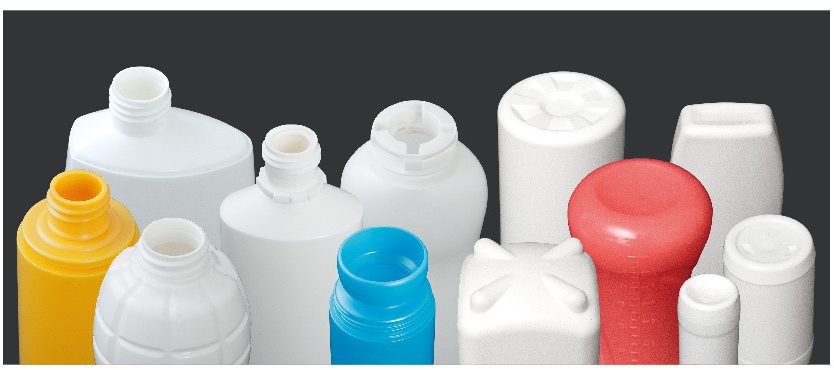
HDPE and PP bottles produced on an injection blow moulding machine — pharma and chemical containers
Why injection blow moulding

Built for precision packaging

01

One-step, flash-free

Bottles come out finished, with no flash or scrap. The process meets GMP standards for pharmaceutical packaging.

02

Perfect neck finish

The neck is injection moulded, so its dimensions are exact and it seals reliably with caps, droppers and pumps.

03

Smooth parting line

Body and base parting lines are smooth, for a premium look on cosmetic and personal-care bottles.

04

Exact weight & volume

Weight, wall thickness and fill volume are controlled precisely, giving consistent bottles cavity to cavity.

05

Multi-cavity output

Multi-cavity moulds run continuously and automatically, from 5 cavities on the 30-class up to 18 on the 135-class for a 100 ml bottle.

06

Many materials

Runs PE, PP, PS, SAN, EVA, COC, PEEK, TPU, PETG and PLA. Mould changes are fast and operator-friendly.

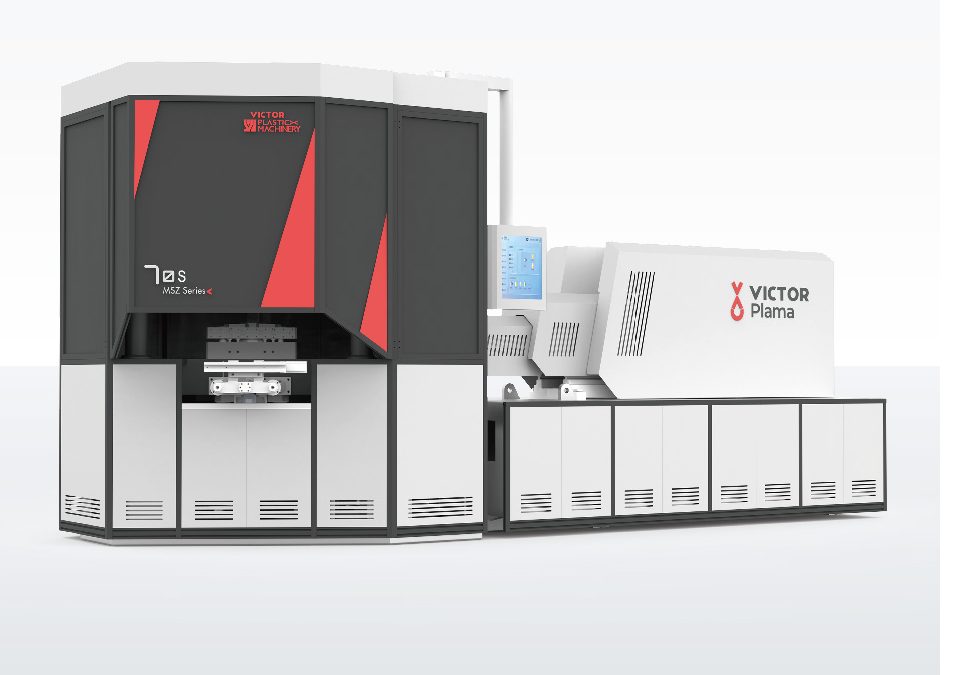
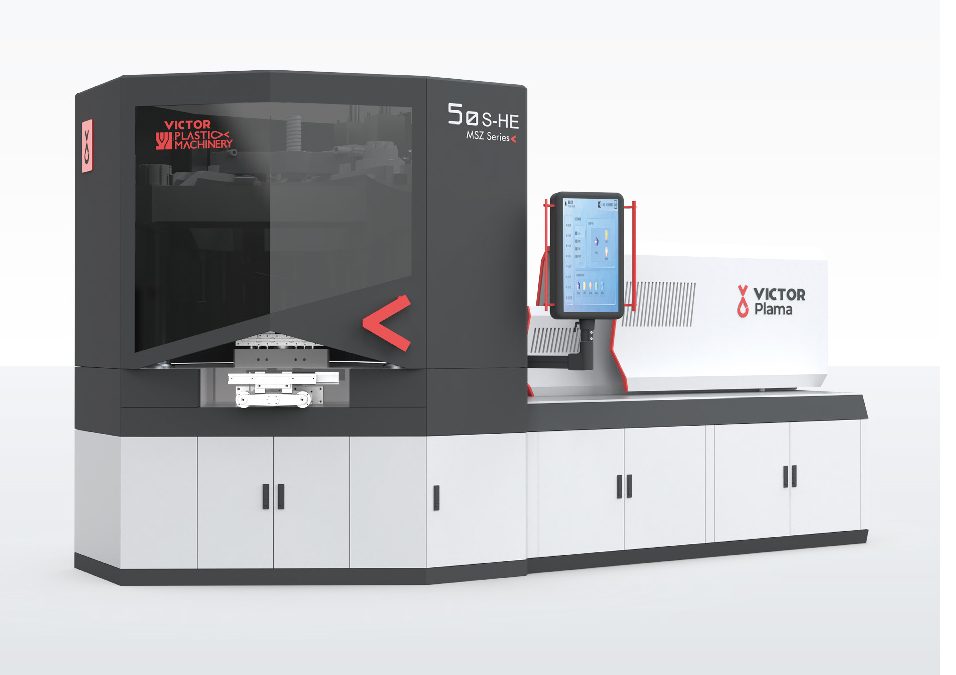
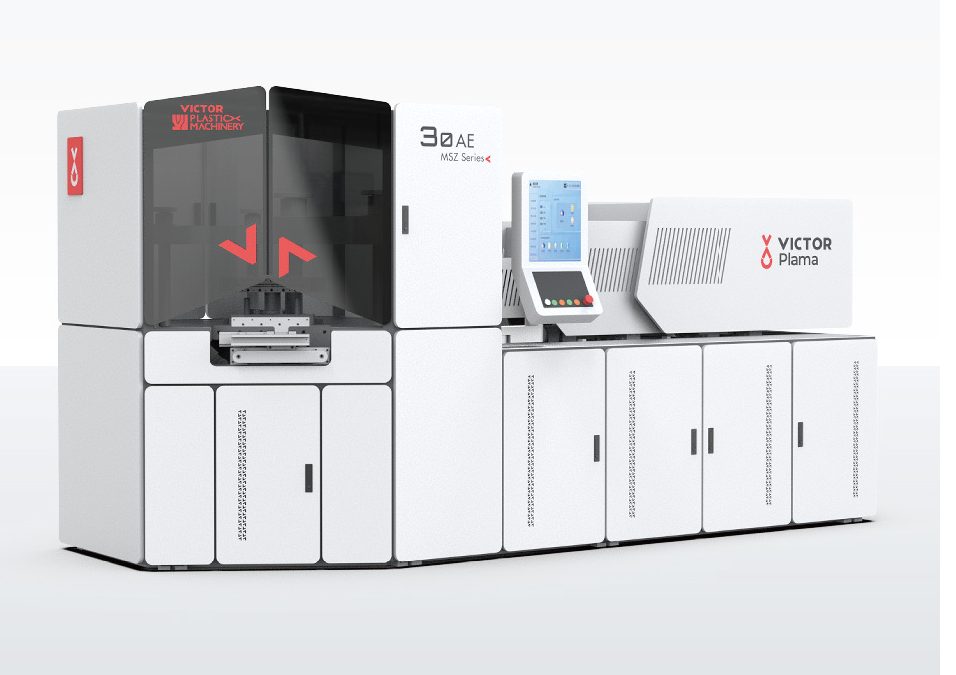
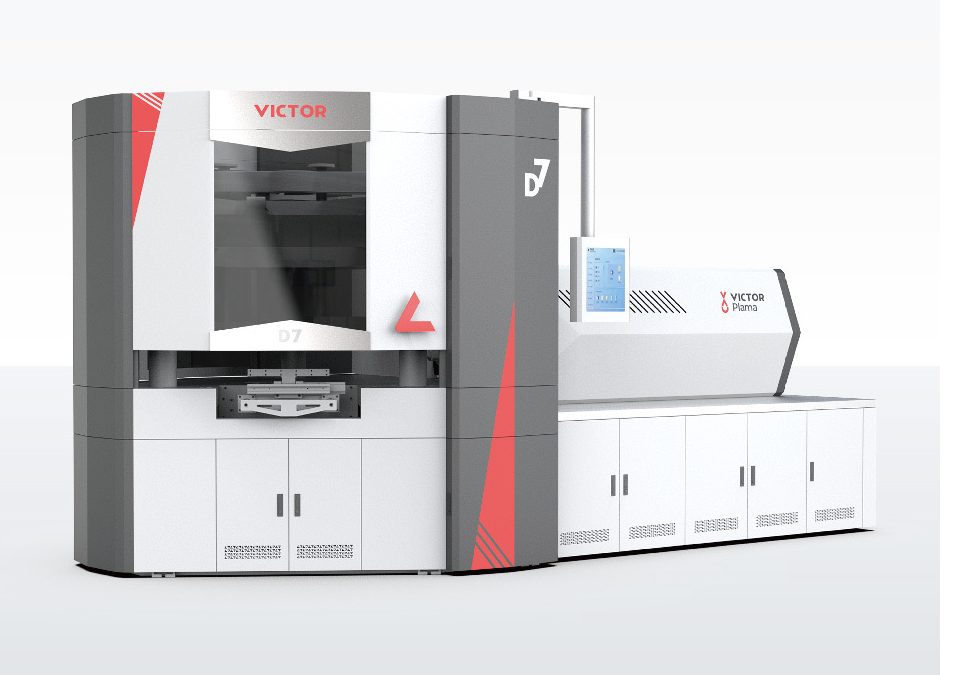
Four platforms

Choose the drive that fits your product and power cost

Real production cases

What the numbers look like

All-electric vs hydraulic: 150 ml HDPE round bottle

9 cavities · 21 g bottleHydraulic (IBM-70)All-electric (IBM-70AE)Difference
Cycle time16.4 s14 s−2.4 s
Output1,975 pcs/h2,314 pcs/h+17%
Energy per 100,000 bottles978 kWh705.6 kWh−27.9%
Time per 100,000 bottles50.6 h43.2 h−14.6%

Hybrid vs hydraulic: 200 ml HDPE bottle

On a 5-cavity mould making 23.6 g, 200 ml HDPE bottles, the hybrid IBM-50S-HE used 0.45 kWh/kg against 0.53 kWh/kg for the hydraulic IBM-50S. That is about 14–15% less energy, or roughly 80 kWh saved for every 1,000 kg of bottles. The savings come from electric charging, electric stripping and electric rotation.

Cavitation by machine size: 100 ml tablet container

Bottle: 34 mm neck · 47 mm body · 78 mm tall · 16 gIBM-30IBM-50SIBM-70SIBM-95SIBM-135
Cavities58111318

D-series: 1 L pesticide bottle

Bottle: 60 mm neck · 88 mm body · 223.8 mm tall · 82 gIBM-D7-ProIBM-D9-ProIBM-D13-Pro
Cavities468
Cycle time24 ± 1 s25 ± 1 s26 ± 1 s
Daily output (24 h)14,400 pcs20,409 pcs26,584 pcs

Case figures are reference results from production trials. Your output depends on bottle design, weight, material and cooling.

Technical parameters

Full IBM model range: 21 models

Where two values are shown for screw, shot volume and shot weight, the machine is available with either screw size. All models need 1 MPa minimum compressed air and ≥0.8–1.2 m³/min discharge, with 3–6 m³/h cooling water depending on size. Scroll the table sideways on mobile.

ModelPlatformScrew Ø (mm)Shot vol. (cm³)Shot wt. HDPE (g)Preform clamp (kN)Blow clamp (kN)Platen L×W (mm)Min. mould (mm)Dry cycle (s)Bottle (ml)Max H / Ø (mm)Motor (kW)Hyd. (MPa)Actual use (kW)Rated incl. mould heat (kW)L×W×H (m)Weight (t)
IBM-30Hydraulic40 / 45200 / 254190 / 241323.246.7400×27018035–800190 / 10013.91410–1826.53.56×1.25×2.254
IBM-30HEHybrid40 / 45200 / 254190 / 241323.246.7400×27018035–800190 / 10013.91410–1851.73.56×1.25×2.254
IBM-30AEAll-electric40 / 45200 / 254190 / 24135053.7400×27018035–800190 / 1009.8—10–1871.53.83×1.53×2.388.4
IBM-Q3Compact high-speed2867.764350100400×2701301.85–10088 / 3638.4—8–1545.43.08×1.49×24
IBM-50HHydraulic45 / 50318 / 392301 / 37250489560×3902403.55–800200 / 100191415–2334.14.11×1.57×2.57
IBM-50SHydraulic45 / 50318 / 392301 / 37252893.4560×39024025–800200 / 100191415–2334.14.11×1.57×2.57.8
IBM-50S-HEHybrid45 / 50318 / 392301 / 37252893.4560×39024025–800200 / 100191415–2363.754.36×1.57×2.58
IBM-50AEAll-electric45 / 50318 / 392301 / 372528109560×39024025–800200 / 1009.8—15–2395.654.8×1.75×2.67.4
IBM-70Hydraulic50 / 55392 / 475372 / 45074289800×3902803.55–800200 / 100311420–2847.84.1×1.78×2.69
IBM-70SHydraulic50 / 55392 / 475372 / 450712107.7800×3902802.15–800200 / 100311420–28514.39×1.91×2.549
IBM-70S-HEHybrid50 / 55392 / 475372 / 450712107.7800×3902802.75–800200 / 100311420–2880.654.64×1.91×2.549
IBM-70AEAll-electric50 / 55392 / 475372 / 450712107.7800×3902802.75–800200 / 1009.8—20–2896.555.1×2×2.610
IBM-D7D-series50 / 55392 / 475372 / 4501000107.7860×4402802.75–800200 / 10023.1+31.714 / 2220–2874.85.1×2×2.612.8
IBM-D7-ProD-series50 / 55392 / 475372 / 4501000107.7860×4402802.75–800200 / 10023.1+31.714 / 2220–28113.15.1×2×2.612.8
IBM-95SHydraulic60 / 65715 / 839677 / 7951008221900×48028035–800220 / 10024+24+101425–35845.0×2.0×2.612
IBM-95S-HEHybrid60 / 65715 / 839677 / 7951008221900×48028035–800220 / 10023.1+31.71425–35102.755.3×2.1×2.612
IBM-D9D-series60 / 65715 / 839677 / 7951500221960×51028035–800220 / 10023.1+31.714 / 2225–3580.85.3×2.1×2.615
IBM-D9-ProD-series60 / 65715 / 839677 / 7951500221960×51028035–800220 / 10023.1+31.714 / 2225–351515.3×2.1×2.615
IBM-135Hydraulic70 / 751077 / 12361020 / 117013442351400×50028035–800220 / 10031.7+31.7+23.114 / 2225–35114.66.0×2.5×2.617
IBM-135HEHybrid70 / 751077 / 12361020 / 117013442351400×50028035–800220 / 10023.1+31.714 / 2225–35144.156.0×2.5×2.617
IBM-D13-ProD-series70 / 751077 / 12361020 / 117020003451400×6003204.55–800220 / 10023.1+42.214 / 2228–38160.256.0×2.5×2.619

Specifications may change without notice. Your contract and technical annex are final. Ask HassanPlas for the full parameter sheet of any model, including stripping stroke, rotary-table lift, heating zones and recommended cable and main-switch sizes.

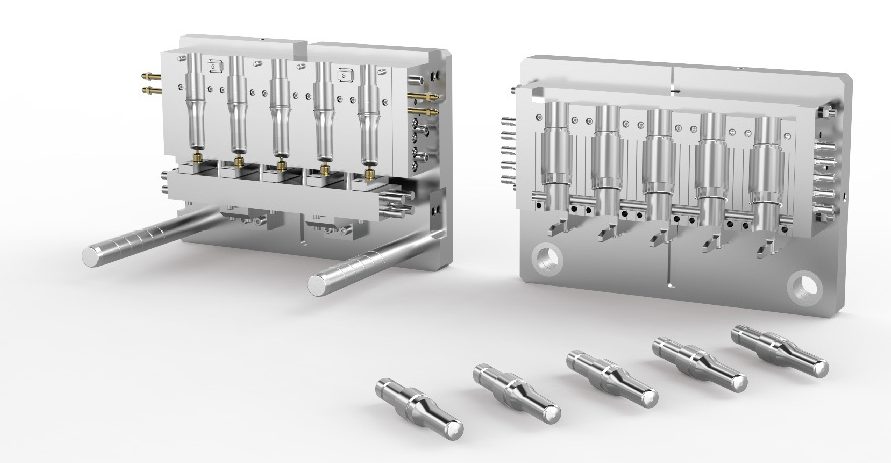
Injection blow mould set with core rods, preform mould and blow mould
IBM moulds

Moulds engineered with the machine

  • Personalised, one-stop tooling. We take your product from bottle design through mould manufacture to trial samples.
  • High-performance mould steels and new composite materials for wear and corrosion resistance and thermal stability, so the mould lasts longer.
  • High-precision machining on advanced processing centres, with digital, simulation-led mould design.
  • Built for the IBM range, and for Jomar and Uniloy machines. If you already run those brands, we can supply replacement or new moulds.
  • Matching closures. We also build injection moulds for caps, flip-top caps and pharma consumables that fit your bottle neck precisely. See cap moulds →
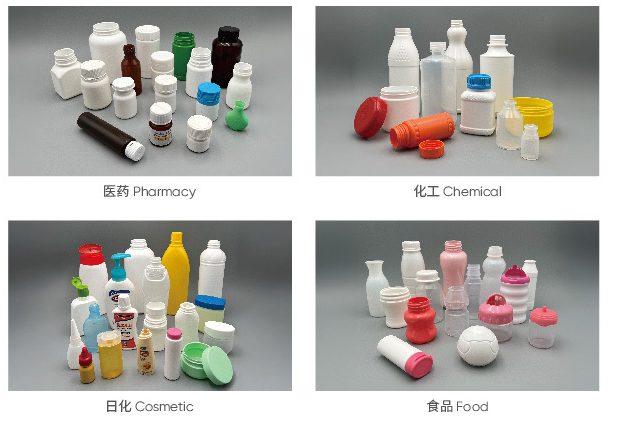
Injection blow moulded bottles for pharmacy, chemical, cosmetic and food applications

Built for your industry

01

Pharmaceutical

Tablet and capsule bottles, syrup bottles, eye-drop and nasal bottles, all flash-free and GMP-compatible, with clean-room-ready all-electric options.

02

Chemical & Agro

Pesticide, reagent and lubricant bottles up to 1 L and more on the D-series, with exact necks for induction seals.

03

Food

Spice, sauce, supplement and dairy bottles in food-grade PE, PP and PETG.

04

Cosmetics & Personal Care

Lotion, roll-on, deodorant and sample bottles with smooth parting lines and premium surface finish.

Complete line

Auxiliaries & automation, matched to the machine

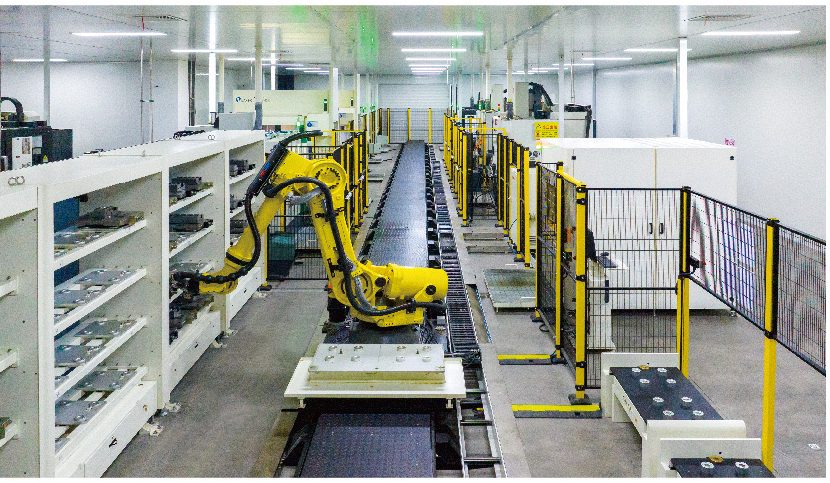
HassanPlas sizes and supplies the whole cell, so your IBM line runs to spec from day one:

  • Mould temperature controller and water chiller for stable preform and blow temperatures.
  • Air compressor, auto loader and colour mixer for material and air supply.
  • On-line leak tester and visual inspection for 100% quality checks at line speed.
  • In-mould labelling and automatic bagging machines for hands-off packing.

See auxiliary equipment →

Automated injection blow moulding production line with robot handling
How we deliver

From your bottle drawing to running production

01

Requirement

We take your bottle, volume target and material, recommend the right machine and help with product and mould design.

02

Proposal

We confirm machine and mould, then add the auxiliary equipment and automation needed to optimise the line.

03

Manufacture & trial

Trial samples go to you, tolerances are adjusted, and the whole line runs an acceptance test before shipment.

04

Install & train

Our engineers install and start up the line in your factory, train your operators, and keep spare parts in stock.

Frequently asked questions

What is an injection blow moulding machine used for?

Injection blow moulding (IBM) makes small, precise hollow containers: pharmaceutical tablet and syrup bottles, eye-drop and cosmetic bottles, and food and chemical bottles, typically from 1 ml up to about 2 litres. The neck is injection moulded, so it is dimensionally exact and the bottle comes out without flash or scrap.

Which materials can an injection blow moulding machine process?

The HassanPlas IBM range processes PE (HDPE/LDPE), PP, PS, SAN, EVA, COC, PEEK, TPU, PETG and PLA.

Should I choose a hydraulic, hybrid or all-electric IBM machine?

Hydraulic models have the lowest purchase price and suit most general bottle work. Hybrid models add servo-electric rotation, charging and stripping, and use roughly 14–15% less energy in the 50-class example. All-electric models suit clean rooms and pharmaceutical work. In a 150 ml HDPE example they cut energy by 27.9% and cycle time from 16.4 s to 14 s compared with the hydraulic equivalent.

Do you supply the moulds with the machine?

Yes. HassanPlas supplies matched IBM moulds for every machine: preform mould, blow mould, core rods and stripper. We can also build IBM moulds for Jomar and Uniloy machines.

Is IBM better than extrusion blow moulding?

For small bottles that need an exact neck, no flash and consistent weight, IBM is better. For bottles with handles, larger sizes above about 1–2 litres, or jerry cans and drums, extrusion blow moulding is the right process. Read our blow moulding process comparison for the full picture.

Get an injection blow moulding quote

Send us your bottle drawing or sample, material, and monthly volume. We'll recommend the model, cavitation and auxiliaries, and send a landed-cost quote within 48 hours. WhatsApp +92 321 4466539.

Request a Quote →
Related: IBM machine buyer's guide · Extrusion blow moulding · Single-stage PET stretch blow

WhatsApp