01
Feeding & colour
Vacuum auto loader, dryer where needed, and a colour masterbatch doser for consistent cap colour.
02
CCMM + mould set
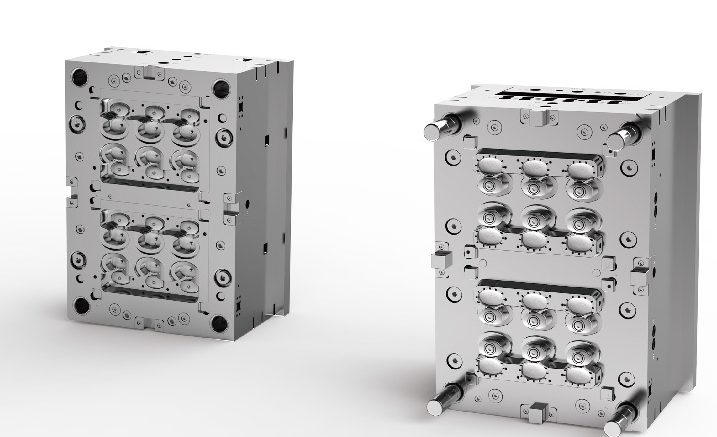
The rotary compression machine with a full mould set (cavities, punches and cooling) sized to your cap.
03
Slitting & folding
Forms the tamper-evident band in line, at full machine speed.
04
Lining & printing
Optional liner or wadding for oil and pharma caps, plus logo printing on the cap top.
05
Vision inspection
Camera inspection rejects short shots, flash and deformed bands automatically.
06
Cooling & air
A water chiller for the mould set and compressed air for ejection and conveying. See auxiliaries →
What is a cap compression moulding machine?
A cap compression moulding machine (CCMM) continuously extrudes plastic and cuts it into precise melt pellets. Each pellet drops into an open mould cavity on a rotating carousel and is compressed into a finished cap. There are no runners or sprues, so there is no runner waste.
Is compression moulding better than injection moulding for caps?
For high-volume, simple-geometry caps such as water, CSD and juice closures, compression moulding usually wins on material use, energy, cap weight and dimensional stability. Injection moulding is more flexible for complex closures such as flip-tops, sports caps and child-resistant caps, and for short runs with frequent changes.
Which caps can a CCMM make?
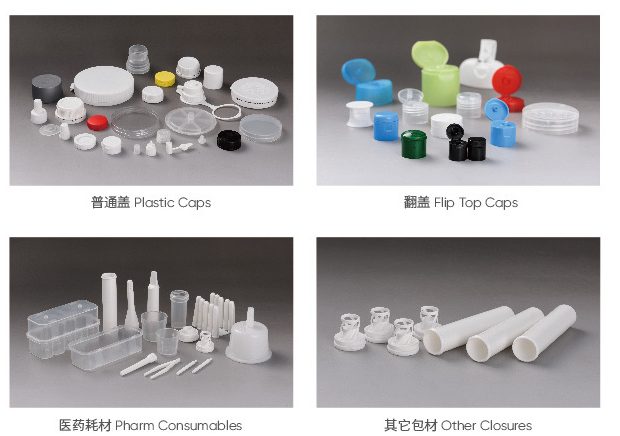
Typical products are HDPE and PP closures for water and CSD bottles (PCO 1810, PCO 1881, 29/25, 30/25), juice, dairy and edible-oil caps, and larger 38 mm closures. You change the mould set to switch cap type.
What other machines are needed in a cap line?
A complete line typically adds a resin feeding and colour dosing system and a slitting and folding machine to form the tamper-evident band. Optional extras are lining or wadding, cap printing, vision inspection, and conveying and packing. HassanPlas supplies the full line.
Get a cap compression line quote
Send us your cap drawing or sample, neck finish, cap weight and annual volume. We'll recommend the machine size and cavitation, and quote the complete line with landed cost. WhatsApp +92 321 4466539.
Request a Quote →