Setting up a PET bottle manufacturing plant is one of the most common projects we handle, and also one of the most commonly under-planned. The machines are well proven; what goes wrong is usually sizing, utilities, raw material handling or the order in which equipment is bought. This guide walks through the full picture for anyone planning to start a mineral water bottle business or a PET packaging unit for oil, beverage, pharma or cosmetics — the equipment you need, how to size it, what the building must provide, and how to sequence the investment. In Pakistan, PET is the dominant packaging material for bottled water, and mineral water bottlers are the largest buyer segment we serve, so many of the examples here use water bottles. The same logic applies to other PET products.
Choose your business model first
Before any machine is selected, decide where in the value chain you want to sit. There are three common models:
| Model | What you do | Main equipment | Suits |
|---|---|---|---|
| 1. Buy preforms, blow bottles | Purchase preforms from a preform maker, blow bottles in-house | Blow moulder, blow moulds, high-pressure air system, chiller | New entrants, low capital, testing the market, 5-gallon producers |
| 2. Make preforms and blow bottles | Convert resin to preforms, then to bottles; possibly sell surplus preforms | Model 1 plus preform injection machine, preform mould, dryer, mould temperature controller, crusher | Established bottlers, bottle suppliers to fillers, preform sellers |
| 3. Integrated bottling | Make bottles and fill, cap, label and pack your own product | Model 2 (or 1) plus water treatment, rinsing-filling-capping, labelling, shrink wrap | Mineral water, edible oil and beverage brands |
The choice between buying and making preforms, and between two-stage and single-stage machines, is covered in detail in our guide PET preform machine vs blow moulding machine. In short: buying preforms keeps capital low but leaves your margin and supply in someone else's hands; making preforms gives you control of weight, colour and cost once volume is steady.
The complete PET bottle manufacturing plant machine list
Here is the full equipment list for a Model 2 plant (make preforms, blow bottles). Items marked optional belong to Model 3.
Preform production
- PET preform injection moulding machine — a servo-driven machine with a PET-specific barrier screw and enough shot capacity for your mould. See our injection moulding machines.
- PET preform mould — the cavity count, neck finish and preform weight define your output and bottle cost. Read the PET preform mould buying guide before you order.
- Dehumidifying dryer — PET absorbs moisture and must be dried before moulding or it degrades, losing IV and clarity. A hopper dryer alone is not sufficient for PET.
- Industrial chiller — cools the preform mould. Preform cycle time is largely a cooling time, so chiller capacity directly sets output.
- Mould temperature controller — used on parts of the tooling where controlled temperature is needed, for example neck and hot runner related zones depending on mould design.
- Vacuum loader and crusher — for resin conveying and grinding rejected preforms and bottles.
Bottle blowing
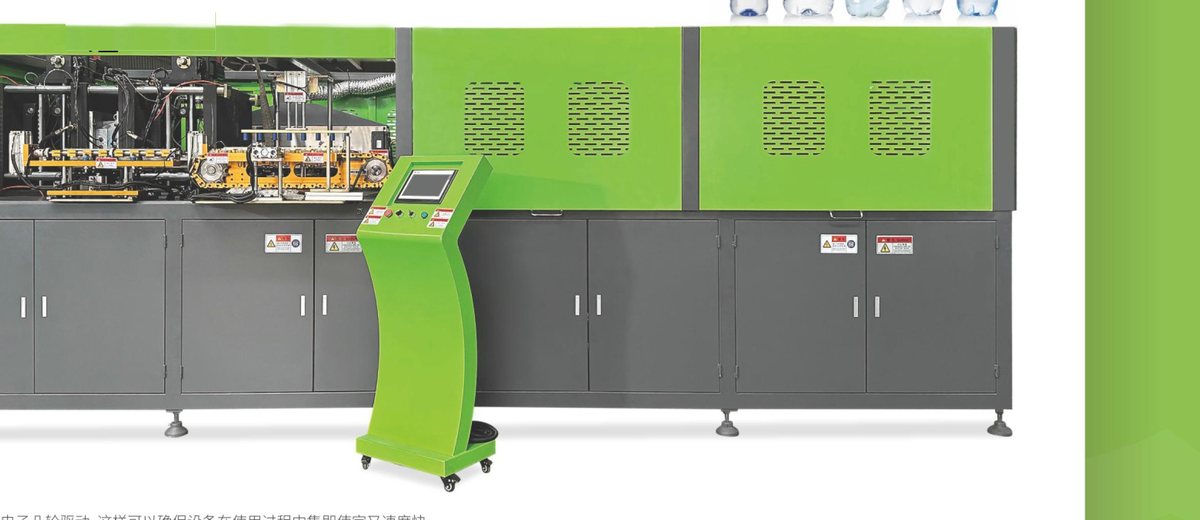
- PET stretch blow moulding machine — semi-automatic (600–1,800 BPH) or full-automatic servo (2–8 cavities, up to around 12,000 BPH). See our PET blow moulding machines.
- Blow moulds — one set per bottle design, matched to the machine's mould pitch.
- High-pressure air system — 30–40 bar compressor, air receiver, line and precision filters, and refrigerated air dryer. This is the heart of the blowing process.
- Low-pressure compressor — 7–8 bar air for the machine's pneumatics, if not supplied by air recovery from the blow system.
- Chiller — for the blow moulds (may share capacity with the preform chiller if sized for both).
- Preform hopper/elevator and bottle conveyors — air conveyors or belt conveyors to the filling area or bagging station.
Caps
- Buy caps from a closure maker, or install a cap injection machine with a cap mould. For very high single-design volumes, compression moulding is an option — see cap compression vs injection moulding.
Optional: filling and packing (Model 3)
- Water treatment (for water plants), rinsing-filling-capping monoblock, labelling machine, date coder, shrink wrapping and carton or pallet packing.

Sizing the line from your daily target
Always size from the market backwards: how many bottles per day can you actually sell, of which sizes? Then use this formula:
Required BPH = daily bottle target ÷ (production hours per day × line efficiency)
Line efficiency accounts for start-up, mould changes, preform changeovers, breaks and minor stops. For a new plant, 80–85% is a realistic planning figure; 90%+ is achievable later with an experienced team.
Worked example (illustrative): a water bottler targets 50,000 bottles of 500 ml per day, running 20 hours with 85% efficiency.
- Effective hours: 20 × 0.85 = 17 hours
- Required output: 50,000 ÷ 17 ≈ 2,950 BPH
- Blow moulder: a 4-cavity full-automatic servo machine rated around 3,800–4,200 BPH for this bottle size gives sensible headroom. A 2-cavity machine would be too tight.
- Preform supply: the same ~2,950 preforms per hour. A 16-cavity mould on a cycle in the region of 13–15 seconds gives roughly 3,800–4,400 preforms per hour, leaving room for growth or for selling surplus preforms.
- Resin: at an assumed preform weight of 12 g, 50,000 bottles need about 600 kg of PET per day, plus a small allowance for rejects.
Our free tools page includes calculators for this type of sizing. Different bottle sizes change the answer: a 1.5 L bottle typically runs at a lower BPH per cavity than a 500 ml bottle, and 5-gallon (19 L) bottles run on dedicated single-cavity machines.
HassanPlas tip: Balance the preform machine and the blow moulder. The preform machine should match or slightly exceed blow capacity; a large gap in either direction leaves money idle. If you plan to sell preforms as a second revenue stream, size that deliberately rather than by accident.
Factory space, layout and utilities
Layout principles
- Straight material flow: resin store → dryer → preform machine → preform storage → blow moulder → bottle conveyor → filling or bagging → finished goods. Avoid crossing forklift routes.
- Separate the compressor room. High-pressure compressors are noisy and generate heat. Put them in a ventilated room close to the blow moulder to keep the high-pressure piping short.
- Chillers and cooling towers outside or in a ventilated area, with short water runs to the machines.
- Clean zone for filling (Model 3), physically separated from the moulding area, with controlled access.
- Storage is bigger than you think. Empty bottles are mostly air. Plan for resin bags, preform boxes and bagged bottles; many new plants run out of storage before they run out of capacity.
Space
Floor space depends heavily on bottle size, storage policy and whether filling is included, so we lay out each plant from the actual machine footprints. As a rough planning guide, a compact two-stage line (one preform machine and one full-automatic blow moulder with auxiliaries) generally needs several hundred square metres for production alone, before raw material and finished goods storage. Allow enough clear height for robots, preform elevators and mould handling.
Utilities
| Utility | What to plan |
|---|---|
| Electricity | Sum of installed loads (preform machine, blow moulder heating, high-pressure compressor, chiller, dryer) plus margin. The blow moulder's oven and the high-pressure compressor are usually the biggest consumers. Check grid capacity and stability; plan voltage stabilisation or generator backup where supply is unreliable. |
| Compressed air | High pressure (30–40 bar) for blowing, low pressure (7–8 bar) for pneumatics. Clean, dry, oil-free air is essential for food contact bottles. |
| Cooling water | Chilled water for moulds; cooling tower or air-cooled chillers for machine oil and compressors. Treated water prevents scale in mould channels. |
| Ambient conditions | Hot, humid conditions affect resin drying, preform storage and chiller performance. Ventilation and, for some plants, partial air conditioning of the blowing area pay back in stable quality. |
Our factory preparation guide covers foundations, power distribution and piping in more depth.
Raw material: bottle-grade PET resin
Use bottle-grade PET resin from a reputable producer, with a certificate of analysis for each lot. The key property is intrinsic viscosity (IV):
- Still water bottles commonly use grades in the lower bottle-grade IV range, roughly around 0.76–0.80 dl/g.
- Carbonated soft drinks generally use higher IV grades, roughly around 0.80–0.84 dl/g, for better pressure and creep resistance.
- Hot-fill and specialty applications may need specific grades; follow the resin producer's recommendation for your application.
Always confirm the grade with your resin supplier and your preform mould designer. Drying is not optional: PET must be dried to a very low moisture level in a dehumidifying dryer before moulding, otherwise hydrolysis lowers IV and produces weak, hazy bottles. Store resin sealed and off the floor. If you add regrind, keep it clean, dry and at a controlled percentage.
Staffing the plant
A two-stage moulding line is not labour-intensive, but it needs the right skills. A typical shift includes:
- A preform machine operator (can also watch the dryer and chiller)
- A blow moulder operator
- A quality checker running the routine tests below
- A maintenance technician (mechanical and electrical), shared across shifts in small plants
- Helpers for packing, material handling and storage
- A production supervisor or plant manager overseeing all shifts
Semi-automatic blow moulders need more operators per bottle produced because preforms are loaded by hand. Training during commissioning is critical — plan for your key people to be present for the whole installation period, not just the final day.
Quality checks every bottle plant needs
Set up a small QC bench from day one. The basic tests are:
- Preform weight — weigh samples from every cavity regularly; variation points to hot runner or mould issues.
- Neck dimensions — check thread and sealing dimensions with go/no-go gauges for your neck finish. Neck faults cause leaks and capping problems.
- Wall thickness distribution — section-weight test (cutting the bottle into bands and weighing) or a wall thickness gauge; thin spots fail top-load and drop tests.
- Top-load test — vertical compression strength, important for stacking and capping.
- Burst and pressure test — essential for carbonated bottles.
- Leak test — with the actual cap and capping torque.
- Visual inspection — haze, pearlescence (over-stretching or cold preforms), black specks, off-centre gate, base defects.
Watch out: Many quality complaints from fillers trace back to the neck, not the bottle body. Keep neck gauges calibrated, check them every shift, and inspect cavities whose preforms show drift before the problem reaches customers.
Regulatory and certification
Regulations vary by country and change over time, so treat this section as a checklist of questions to ask rather than legal advice:
- Pakistan: bottled water producers need PSQCA certification. Provincial food authorities may also have registration and inspection requirements. Check the current requirements with the relevant authorities before you commit to a site and a layout.
- Other markets: check local food-contact material rules for PET bottles, caps and masterbatch, and the standards that apply to your product (water, juice, oil, pharma).
- Supplier documents: collect food-contact declarations for resin, masterbatch and caps, and keep lot records.
- Factory licensing: environmental, fire safety and labour registrations as required locally.
Common startup mistakes
- Buying machines before knowing the bottle. Neck finish, bottle weight and design must be fixed first; they determine the preform mould, blow mould and even the machine pitch.
- Under-sizing the high-pressure compressor. Bottles that will not fully form, weak bases and low output are often air problems, not machine problems.
- Skipping the dehumidifying dryer. Undried PET produces brittle, hazy preforms.
- No space for storage. Bottles, preforms and resin need far more room than the machines.
- Poor power quality. Voltage fluctuations damage servo drives and heaters. Budget for stabilisation.
- Ignoring spare parts. Keep heaters, thermocouples, seals and valves on the shelf.
- Choosing on machine price alone. Commissioning, training and spare parts support decide whether you produce in week one or month three. Our guide to buying machinery from China explains what to check.
A phased roadmap and how HassanPlas supports it
Many successful bottlers grow in phases rather than buying everything at once:
- Phase 1 — Market entry: buy preforms, install a semi-automatic or small full-automatic blow moulder with a correctly sized air system. Build customers and learn the process.
- Phase 2 — Preform independence: add a preform injection machine and mould sized to your blow capacity, plus dryer, chiller and crusher. Margin improves and you control preform weight and quality.
- Phase 3 — Scale and integrate: upgrade to a higher-cavity blow moulder, add a cap line if volume justifies it, and, if you are a brand owner, add filling, labelling and packing.
Plan the building and utilities for Phase 3 even if you only install Phase 1.
HassanPlas supplies turnkey PET plants from the first specification to the first saleable bottle: line sizing, machine and mould selection, auxiliaries, pre-shipment inspection in China, freight, installation and commissioning, operator training and spare parts support. With offices in Lahore and Taizhou and more than 25 years in the plastics trade, we can coordinate the full line as one engineered package rather than a collection of separate purchases. See our services for details, and our guide on importing machinery from China to Pakistan for the logistics side.
Frequently asked questions
What machines are needed to start a PET bottle manufacturing plant?
A complete PET bottle manufacturing plant needs a PET preform injection moulding machine with a preform mould, a dehumidifying dryer, chiller, mould temperature controller, a stretch blow moulding machine with blow moulds, a high-pressure air system (30 to 40 bar compressor, receiver, filters and air dryer), a low-pressure compressor, a crusher and conveyors. If you buy preforms, you only need the blow moulder, blow moulds, air system and chiller.
How do I calculate the right blow moulding machine size for my plant?
Divide your daily bottle target by production hours per day multiplied by line efficiency. For example, 50,000 bottles per day over 20 hours at 85% efficiency needs about 2,950 bottles per hour, so a 4-cavity full-automatic machine rated around 3,800 to 4,200 BPH for that bottle size is a sensible choice.
Should a new mineral water bottle business make its own preforms?
Not always. Buying preforms and blowing bottles in-house keeps the initial investment low and is a good way to enter the market. Making your own preforms improves margin and control once your daily volume is steady enough to keep a preform machine busy.
What PET resin grade is used for water bottles?
Still water bottles commonly use bottle-grade PET with an intrinsic viscosity roughly around 0.76 to 0.80 dl/g, while carbonated drinks generally use higher IV grades. Always confirm the grade with your resin supplier and dry PET in a dehumidifying dryer before moulding.
Do I need PSQCA certification to sell bottled water in Pakistan?
Yes, bottled water producers in Pakistan need PSQCA certification, and provincial food authorities may have additional requirements. Check the current requirements with the relevant authorities before finalising your site and layout.
Can HassanPlas supply a complete turnkey PET bottle plant?
Yes. HassanPlas supplies complete PET lines including preform injection machines, preform and blow moulds, blow moulders, auxiliaries and cap equipment, with inspection, freight, installation, commissioning, training and spare parts support.
Planning a PET bottle plant?
Send us your bottle sizes, daily target and site details. HassanPlas will propose a complete line with machine list, utilities and a phased plan within 48 hours. WhatsApp +92 321 4466539 or email hassanplas@gmail.com.
Request a Quote →